
Air conditioning or a heat pump: which do you need?
If you want to heat and cool particular rooms, you want air conditioning: an air-to-air heat pump that warms or cools each room through an indoor unit on the wall. If you want to replace your boiler and heat the whole house, hot water included, you want an air-to-water heat pump, which feeds your radiators or underfloor heating and a hot water cylinder. Both take heat from the outside air using electricity. The difference is where that heat goes.
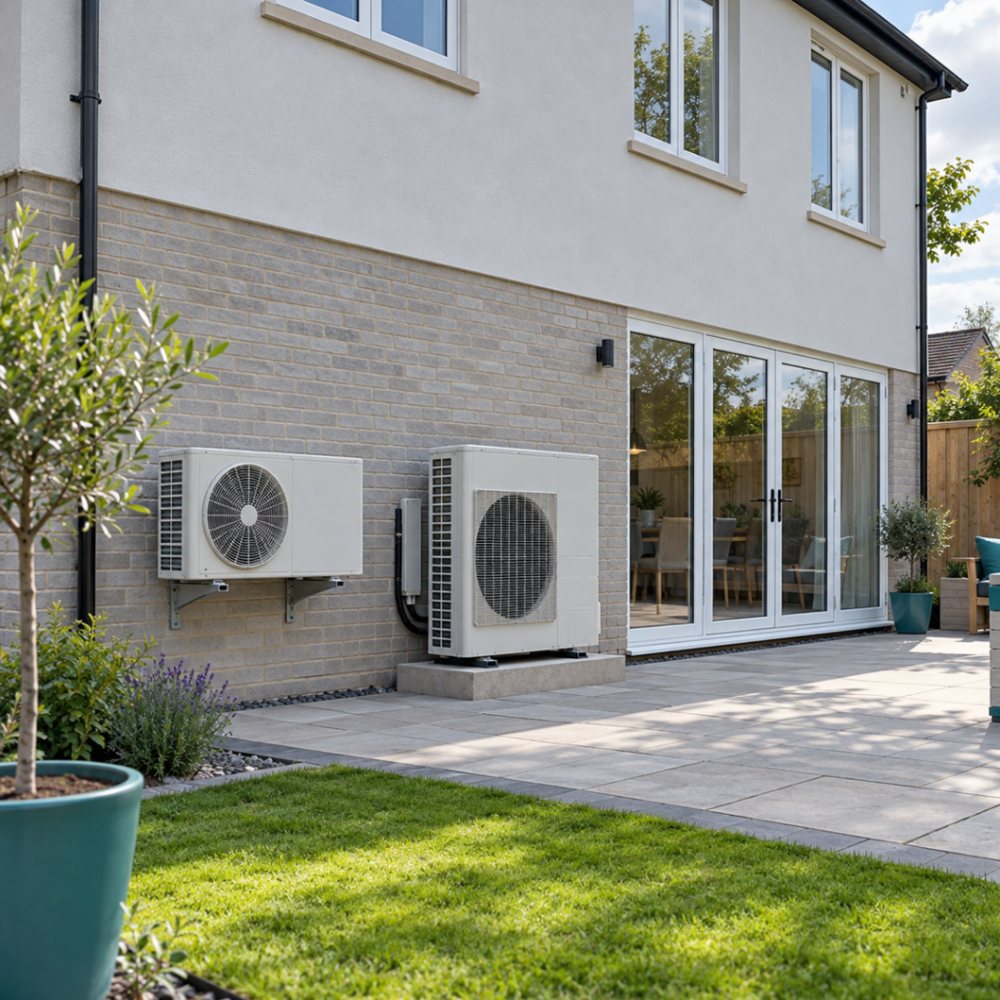
Two kinds of heat pump, one simple difference
Air conditioning and air source heat pumps work in much the same way. An outdoor unit draws heat from the outside air into a refrigerant, a fluid that carries heat, and a compressor raises its temperature so it can be passed into your home. The difference is where that heat goes.
Into the air of a room
Small pipes run to indoor units on the wall, and a fan blows warm air into the room. Most can also work the other way on hot days to cool the room, which is why people call it air conditioning.
Into water
That water runs round your radiators or underfloor heating and heats a hot water cylinder for your taps, showers and baths. In other words, it does the job of a boiler.
Air conditioning and heat pumps at a glance
Air conditioning
- Heats and cools the rooms that have an indoor unit
- Can also dry the air on damp, muggy days
- Many systems do not heat your hot water, so you keep your current way of doing that
- Needs an outdoor unit and a route for small pipes to each indoor unit
- Leaves your boiler and radiators as they are
Air-to-water heat pump
- Heats the whole home through radiators or underfloor heating
- Heats a hot water cylinder for taps, showers and baths
- Usually needs a cupboard of at least 80cm by 80cm for the cylinder
- Runs radiators cooler than a boiler, so some may need to be bigger
- Replaces a gas or oil boiler, or can work alongside one in a hybrid system
What your home needs for each
An air-to-water heat pump heats water to a lower temperature than a boiler. The Energy Saving Trust gives these as usual figures:
If a radiator is too small for its room, that room will not get warm, so a proper survey looks at every room and shows which radiators, if any, need upgrading. A standard heat pump does not give hot water on demand the way a combi boiler does, so most homes need a hot water cylinder. If you have a combi now, you will need somewhere to put one.
Air conditioning asks far less of the house. Your boiler, radiators and hot water stay as they are. It needs a wall for each indoor unit, a spot outside for the outdoor unit and a route for the pipework between them.
Noise and the outdoor unit
Both systems have an outdoor unit with a fan, and the fan is the main source of sound. A good position:
- Sits away from bedroom windows
- Is level and firmly fixed
- Has clear space around it so air can flow freely
- Bear in mind units work harder in the coldest weather, so you may hear more of them then
In England, most air source heat pump installations count as permitted development, so planning permission is usually not needed. That depends on meeting the MCS planning standard, which includes a noise check against the nearest neighbouring home. Listed buildings and conservation areas can be different, so check with your council.
Efficiency and running costs in plain terms
A heat pump does not turn electricity straight into heat the way a fan heater does. It uses electricity to move heat that is already in the outside air.
For every four units of heat delivered to your home, about three come from the air.
The Energy Saving Trust says heat pumps are more than three times more efficient than a gas or oil boiler. That does not mean bills fall by the same amount, because electricity costs more per unit than gas. What you pay depends on your tariff, what you are replacing, whether the system was sized to how much heat your home loses, and how it is set up and controlled.
The Energy Saving Trust says a heat pump can cost slightly more to run than a new gas boiler on a standard tariff, while a time of use tariff can bring it below.
Which one for you?
A few everyday situations make the choice clearer.
- Your boiler is getting old and you want the whole house off gas or oil
- An air-to-water heat pump, with a hot water cylinder and any radiator upgrades the survey finds
- Your conservatory is too hot in summer and too cold in winter
- Air conditioning in that one room, without touching the rest of your heating
- You work from home in a spare room that overheats in the afternoon
- One indoor unit: cooling in summer and warmth in winter
- You run a shop, café, office or small surgery
- Air conditioning heats and cools the space all year from wall or ceiling units
- You live in a flat with no room for a cylinder
- Air conditioning may suit you better. The Energy Saving Trust notes air-to-air is more often used in smaller homes such as flats
- You want both
- A heat pump for heating and hot water, and air conditioning in the rooms that overheat. The two do different jobs
How Nord Group helps you choose
Nord Group brings both trades together, so you are not asked to pick a technology before anyone has looked at your home. ArcticNord fits air conditioning for homes and businesses, installed by F-Gas registered engineers. AuraNord fits air source heat pumps, sized on a room-by-room heat loss calculation rather than floor area.
- Step 1
A free survey
No obligation, and on a mixed job two specialists can survey on the same visit.
- Step 2
A written quote
Sized from each room's heating and cooling needs.
- Step 3
One project manager
One person looks after the job from order to handover.
Ready to find out which suits your home? Book your free survey with ArcticNord for air conditioning or AuraNord for an air source heat pump. Not sure yet? Call Nord Group on 0333 090 7546 and we will help you work out where to start.
Book a surveyQuestions people ask
Is air conditioning the same as a heat pump?
Air conditioning that heats as well as cools is an air-to-air heat pump. It moves heat from the outside air into your rooms in winter and, in cooling mode, takes heat out of your rooms on hot days. An air-to-water heat pump is the other kind: it heats your radiators and hot water instead.
Can air conditioning heat my hot water?
Many air-to-air systems do not provide hot water, so you would keep your current way of heating water. If you want a heat pump to look after your hot water, that is an air-to-water heat pump with a hot water cylinder.
Will I need new radiators with a heat pump?
Not always. An air-to-water heat pump runs radiators cooler than a boiler, so a radiator that is too small for its room will struggle to warm it. A room-by-room heat loss calculation during the survey shows which radiators, if any, need to be bigger.
Are the outdoor units noisy?
Both have an outdoor unit with a fan, and you will hear it working close up. Good placing makes the difference: away from bedroom windows, level, firmly fixed and with space for air to flow. In England, a heat pump installed under permitted development has to pass a noise check against the nearest neighbouring home.
Where these facts come from
- Energy Saving Trust, air source (air-to-water) heat pumps: how they work, radiators or underfloor heating, hot water cylinder in a cupboard …checked 2026-10-22
- Energy Saving Trust, running a heat pump efficiently: around 45°C usual for heat pumps against about 75°C for boilers; an undersized radiato…checked 2026-10-22
- MCS, air-to-air heat pumps: outdoor unit to wall-mounted indoor units through pipework, much like air conditioning; heat delivered by fans; …checked 2026-10-22
- Daikin UK heat pump fact checker: for every four units of heat, three come from the air; running costs not cut by the same amount because el…checked 2026-10-22
- Planning Portal (government planning service), air source heat pumps: permitted development in England depends on meeting MCS 020a; excludes…checked 2026-10-22
- NIBE UK (heat pump manufacturer), heat pump noise: fan is the main source, site away from windows and bedrooms, level and firm fixing, clear…checked 2026-10-22
- Nord Group, how it works: free, no-obligation survey, sometimes two specialists on mixed jobs, quote in writing, one project manager from or…checked 2026-10-22
- ArcticNord: air conditioning and air-to-air heat pumps for homes, conservatories, shops, cafés and offices; heating, cooling and dehumidifyi…checked 2026-10-22
- AuraNord: air source heat pumps sized on a room-by-room heat loss calculation, not floor area; hybrid systems; unvented cylinders; survey id…checked 2026-10-22